
Why Walking Alone Won’t Get You Fit (And What Actually Works)
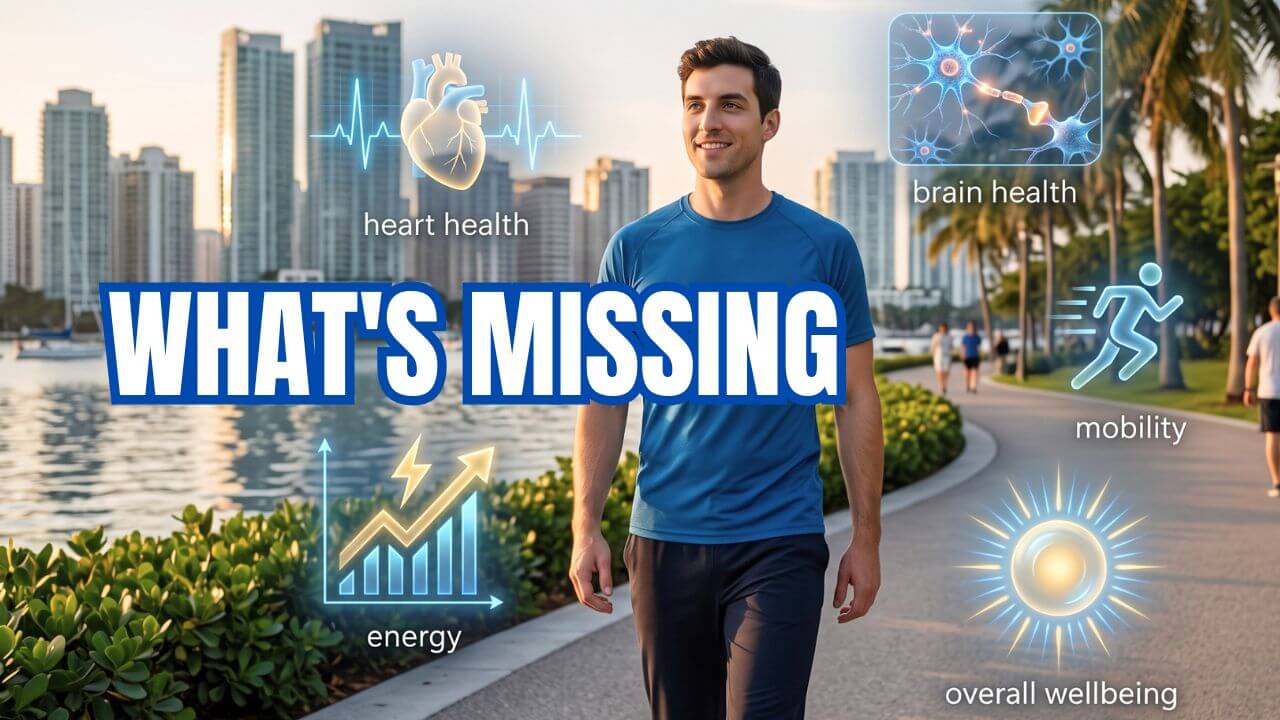
Why Walking Alone Won’t Get You Fit (And What Actually Works)
Adapted from a video on my PeakPhysic YouTube channel. Subscribe for more science‑backed fitness insights.
Watch the video above, then read on for the full breakdown of when walking is enough — and when you need more.
Walk more, hit 10,000 steps daily, and that should get you some feel‑good exercise. Just that, and you believe you’ve done the right, good exercise for yourself. Is walking enough? It depends. Let’s break down exactly when walking counts as real exercise and when it doesn’t — and exactly what to add if it isn’t enough on its own. Because if you think walking alone checks all the boxes, you’re missing critical pieces.
⚠️ Disclaimer: This article is for educational and analytical purposes only. It does not constitute medical or fitness advice. Consult a qualified professional before starting any new exercise programme.
What Walking Actually Does for Your Body
The benefits are real and significant. A simple walk after lunch can lift your mood and calm the anxiety left over from a heated discussion earlier in the management meeting. Walking, especially when you pick up the pace, gets those feel‑good endorphins flowing and reduces cortisol, the stress hormone. This happens fast. It’s one of the most immediate benefits you’ll feel.
A few weeks in, walking fires up muscles in your legs, torso, and back. Your body adapts by remodelling blood vessels to pump more oxygen where it’s needed. Your heart gets better at its job too. Keep this up for a few months: lower blood pressure, less chance of heart attacks and strokes. This is where walking earns its reputation — your heart actually gets stronger.
Here’s a piece that rarely comes up. Every step you take is putting load through your skeleton, and bone responds to that load by getting denser — pulling in more calcium, more minerals, building itself up over the years. Someone who’s walked consistently for a decade is carrying noticeably stronger bones than someone who’s spent that same decade in a chair, quietly wondering why their lower back complains all the time.
The payoff compounds from there. Consistent walkers tend to manage their weight more easily, cut their risk of type 2 diabetes substantially, see lower rates across several types of cancer, and hold onto sharper cognitive function later in life — walking is genuinely tied to a real reduction in dementia risk. None of this is minor.
Walking is so accessible, and it scales to nearly any age or ability. Research suggests any increase in how much you move helps, and it doesn’t need to happen in one block. Commuting on foot, hauling groceries, catching up with a friend on a walk — it all counts, and it all stacks up. And if you’re currently inactive — under about 5,000 steps a day — walking is unquestionably real exercise for you, no asterisk needed. Building toward 10,000‑plus from there is a genuine turning point for your body.
When Walking Isn’t Enough
If you’re already logging serious daily steps and you’re in reasonably good shape, walking on its own does not check every box your health needs. Your body needs more challenge. Be clear about which category you’re actually in.
Walking won’t build meaningful muscle. It won’t push your cardiovascular system hard once you’re already fit. It doesn’t carry the bone‑loading intensity that lifting does. And it can’t deliver the metabolic effect that comes from genuinely high‑intensity effort.
So if you want a genuinely complete routine, add two things: real cardio, and strength training.
What to Add: Cardio
Hard enough that you’re breathing heavily, at least half an hour, at least three times a week. Running, cycling, swimming, the elliptical, rowing, even a jump rope — anything that gets you there works. This is what actually raises your VO₂ max and builds real cardiovascular capacity — walking alone can’t get you there. Use our VO₂ Max Estimator to track your cardio fitness and our Heart Rate Zones Calculator to find your training intensity.
A rough gauge: if you can carry on a full conversation the whole time, you’re not pushing hard enough. If jumping straight into running feels like too big a leap from walking, there’s an easier bridge — a method called IWT, Interval Walking Training, developed in Japan. Check out our full guide on Japanese Interval Walking Training to ease into more cardio without the joint stress.
What to Add: Strength Training
Twice a week, full‑body — weights, machines, or just your own bodyweight. This is what builds and holds onto muscle as you age, keeps your bones dense in a way even walking can’t match, and protects you from becoming frail and losing your independence later in life. Use our 1‑Rep Max Calculator and Strength Standards to benchmark your progress.
🩺 See your full fitness picture: Start with our Your Fitness Vitals hub — BMI, body fat %, waist‑to‑hip, heart rate zones, VO₂ max, strength standards, and calorie target all in one guided flow.
The Bottom Line
Walking is fantastic, but that doesn’t mean it’s enough as an exercise for everyone. Daily steps plus hard cardio plus lifting weights — that’s what complete fitness looks like. Walking is your foundation. Now quit making excuses and build on it.
Comment below and tell me which piece you’re actually missing — cardio, or strength. Let’s figure out your next step. Train smarter, not harder.
📺 This article was adapted from a PeakPhysic video. Subscribe to PeakPhysic for more science‑backed fitness insights.
Related tools: VO₂ Max Estimator | Heart Rate Zones | 1‑Rep Max Calculator | Strength Standards | Your Fitness Vitals | Interval Walking Guide | More articles: Analytical Living
Author: Dr. Shirley Cheung. This content is for informational purposes only and does not constitute professional fitness or medical advice.