
Why Holding a Forearm Plank Longer Is Not Better
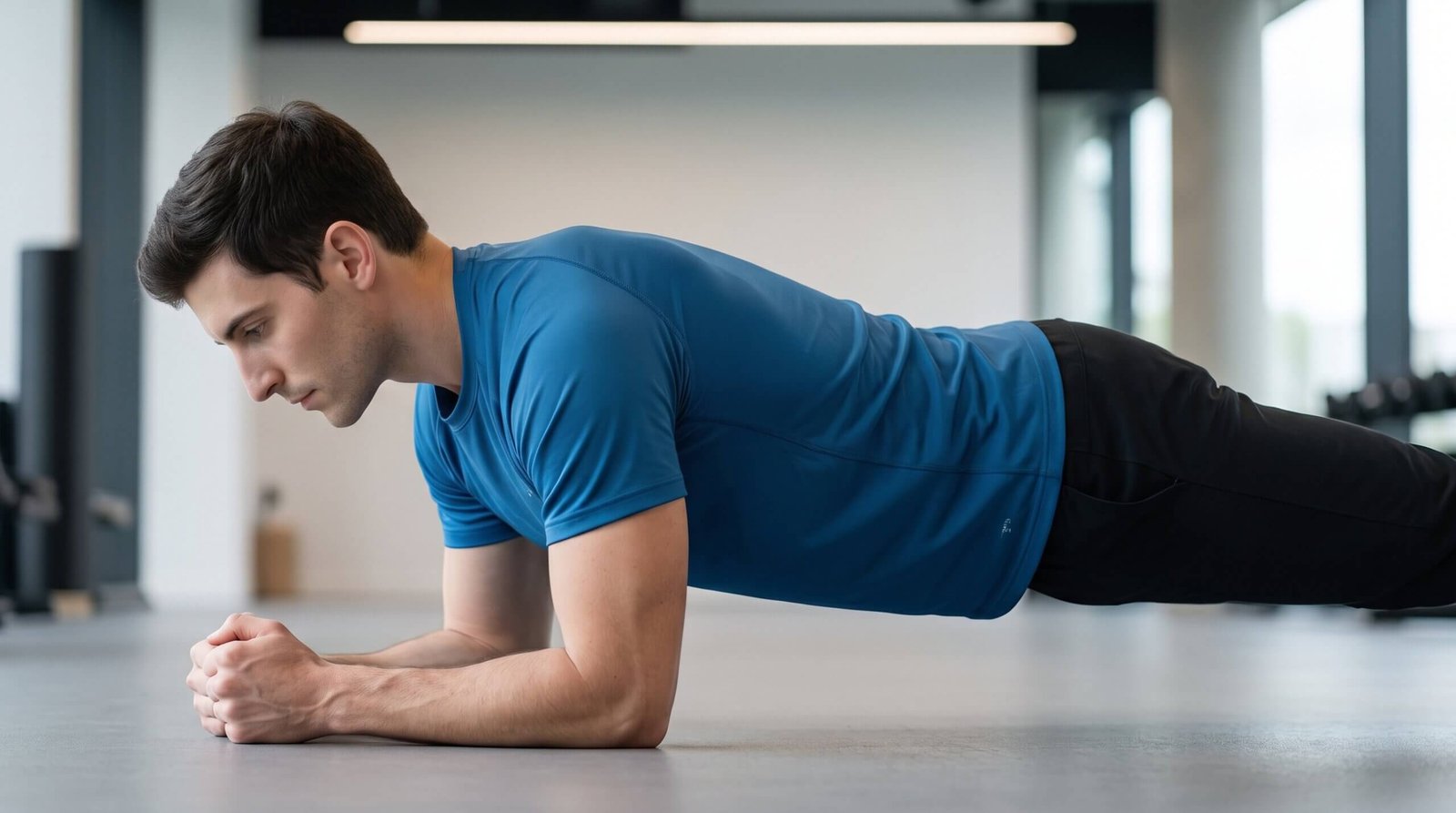
When it comes to planks, most people use one success measure: how long can you hold it? But a plank has more than one success measure. Duration matters. But so do tension, alignment, and control. A forearm plank is about creating tension and controlling your body, not simply surviving longer.
⚠️ Disclaimer: This article is for educational and analytical purposes only. It does not constitute medical or fitness advice. Consult a qualified professional before starting any new exercise programme.
How to Perform the Forearm Plank Properly
- Start on your forearms and toes.
- Place your elbows underneath your shoulders.
- Brace your abs.
- Squeeze your glutes.
- Keep your head, shoulders, hips, and heels aligned.
- Keep your neck neutral and breathe steadily.
Focus on the brace, the squeeze, and your alignment. There are four things to laser-focus on:
- Stable trunk
- Controlled pelvis
- Steady breathing
- Consistent tension
Watch the video above to see the movement in action.
Get the Position Right First
This is where form matters. If your hips sag or your pelvis tips forward, you may start feeling the plank more in your lower back than in your abs. Check your position: ribs controlled, glutes engaged, hips aligned with your shoulders. Get the position right first. Because if you hold an incorrect position too long, you may eventually start hurting your back without even realising your form is the reason.
It’s More Than an Ab Exercise
If all of that falls into place, you are definitely working your abs. Plus, your obliques, glutes, back muscles, and shoulders are working too. The forearm plank is a whole-body isometric exercise because you’re creating tension across your body while staying in one position.
So yes, calling a plank an abs workout is absolutely appropriate. But if you look at what your core is actually doing during the exercise — resisting unwanted movement and keeping your trunk stable — it is equally useful to think of the plank as a core stability exercise.
📊 Track your fitness progress: Use our Strength Standards to benchmark your core strength, or the BMI Calculator to monitor body composition changes.
Longer? Or Harder?
The current Guinness World Record for the longest abdominal plank is more than 9+ hours for men, more than 4 hours for women, and more than 1 hour for children — records recorded as of 2023, 2024, and 2026 respectively. So clearly, the human body can hold a plank for a very long time. And yes, a record like that feels like a trophy. But your goal doesn’t have to be breaking a record.
Once you’ve mastered the basic forearm plank, you can make the exercise more challenging in many other ways:
- Straight-arm plank
- Feet-elevated plank
- Side plank
- Plank reach
- Plank shoulder tap
- Plank bodysaw
These variations change the challenge while keeping the plank’s basic principle: create tension and control your body.
So What Should You Measure?
If you want to keep challenging yourself with planks, don’t just hold longer — up the game. Countless variations will challenge your body far more effectively than grinding out a three-minute hold. When you train your plank, don’t use duration alone as your measure of success. You can also measure: how much tension you can create, and how difficult a variation you can control. That’s a much broader picture of progress.
The Bottom Line
The forearm plank is a great full-body isometric exercise. It trains your core and other stabilising muscles to create tension and resist unwanted movement. Try it today. Hold a controlled forearm plank and focus on the quality of the hold, not just the time. Commit to yourself and get 1% better each day. Train smarter, not harder.
📺 This article was adapted from a PeakPhysic video. Subscribe to PeakPhysic for more science‑backed fitness insights.
Related tools: Strength Standards | BMI Calculator | 1‑Rep Max Calculator | More articles: Analytical Living
Author: Dr. Shirley Cheung. This content is for informational purposes only and does not constitute professional fitness or medical advice.