
Cardio ? Strength Training? Which One should I start first?
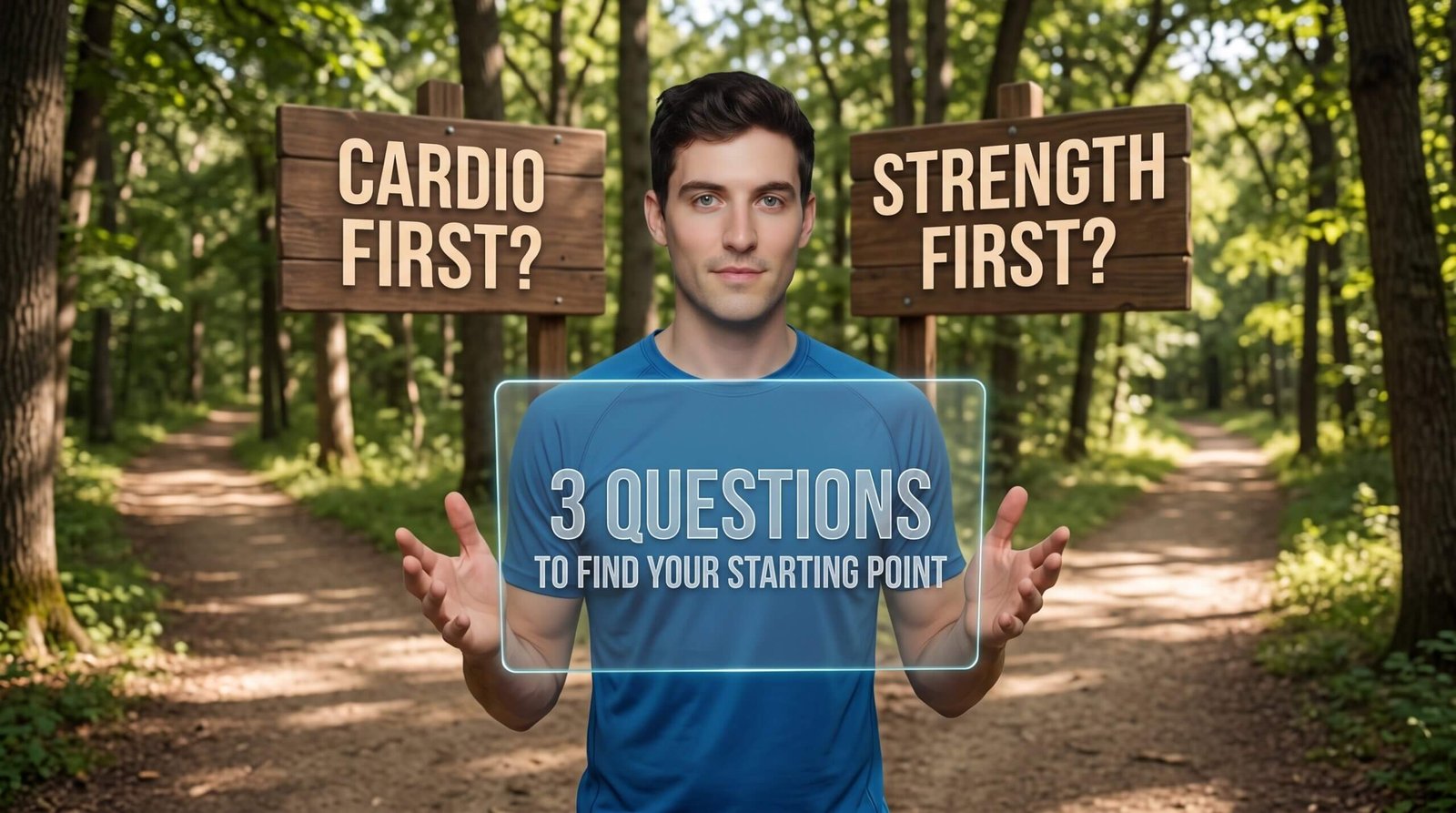
Cardio or Strength First? How Beginners Should Choose
Adapted from a video on my PeakPhysic YouTube channel. Subscribe for more science‑backed fitness insights.
Watch the video above, then read on for the full breakdown of how to choose your starting point.
One good thought before we start: you don’t have to be fit to start. Starting is how you become fit. And if today happens to be your starting point, here’s the first question: cardio or strength training?
For someone starting almost from zero — someone who may find even a basic squat difficult to understand or coordinate — I usually lean toward cardio first. Build some cardiovascular fitness, improve basic coordination and movement confidence, feel a little lighter and more agile when moving. Then gradually introduce strength training as those foundations develop. But there isn’t one starting point that fits everyone. Let’s compare both approaches so you can decide which makes more sense for you.
⚠️ Disclaimer: This article is for educational and analytical purposes only. It does not constitute medical or fitness advice. Consult a qualified professional before starting any new exercise programme.
Two Clear Paths
Path one: Cardio first. Your priority is getting your body moving continuously and building basic aerobic fitness.
Path two: Strength first. Your priority is learning basic resistance movements and building strength and stability.
Neither path means you ignore the other type of exercise. We’re simply deciding where you should begin.
What Cardio Actually Means
Cardio is exercise that keeps your body moving continuously enough to make your heartbeat faster and your breathing increase. Think brisk walking, easy jogging, cycling, swimming, stair climbing or hiking, even a beginner cardio or dance class. The common feature is that you’re using large muscle groups continuously for several minutes, which makes your heart and lungs work harder than at rest.
For a complete beginner, walking is probably the simplest example. You already know the movement. You can start with five, 10, or 20 minutes and adjust the pace to match your current fitness level. As you become fitter, you can walk faster, walk longer, add hills, or progress to another form of cardio. Use our Heart Rate Zones Calculator to find your ideal training intensity.
This path may suit you particularly well if you get winded easily, feel physically sluggish or uncoordinated, or want a familiar way to ease into regular exercise. I had a friend ask me this exact question. Even something like a squat was difficult for her to visualise and coordinate. So rather than starting with a series of exercises she was struggling to perform, she started with interval walking training — fast walking, recovery walking, repeat. She could understand it immediately and start exercising. Cardio can give some beginners a very simple doorway into exercise. Check out our guide on Japanese Interval Walking Training for a structured approach.
What Strength Training Actually Means
Strength training means making your muscles work against some form of resistance. That resistance could be your own body weight, resistance bands, dumbbells, gym machines, or a barbell. For a complete beginner, it could be a sit‑to‑stand from a chair, a wall push‑up, a glute bridge, a simple row with a resistance band. These movements begin developing strength without requiring complicated equipment.
This path makes sense if you already move around reasonably comfortably but feel physically weak. Perhaps getting out of a chair feels harder than it should. Carrying groceries feels difficult. Your legs don’t feel particularly strong. Strength training directly addresses those needs. Use our 1‑Rep Max Calculator and Strength Standards to benchmark your progress as you build strength.
🩺 See your full fitness picture: Start with our Your Fitness Vitals hub — BMI, body fat %, waist‑to‑hip, heart rate zones, VO₂ max, strength standards, and calorie target all in one guided flow.
What If Your Goal Is Weight Loss?
For many beginners, losing weight is the real reason they’re starting. If that’s your main goal, nutrition matters enormously — because losing body fat ultimately requires you to use more energy than you consume over time. If your weight changes unexpectedly or you suspect an underlying health condition, speak with your doctor rather than assuming more exercise is the answer.
Exercise still plays an important role. For a complete beginner, cardio is an accessible way to start increasing activity and fitness. Then bring strength training into the picture early — it helps you build or preserve muscle while you’re losing weight. Use our Calorie Deficit Calculator to find your numbers.
Three Questions to Choose Your Path
Question 1: What does your body need most right now?
Do you feel stiff, sluggish, or uncomfortable moving for sustained periods? Do you get winded easily? Then movement and flow points toward cardio. Or do you move reasonably well but feel weak or unstable? Then strength and stability points toward strength training.
Question 2: Which one will you actually enjoy doing?
Maybe you love going outside for a walk. You enjoy cycling. You like music and would happily join a cardio class. Starting there makes sense. Or perhaps you enjoy the idea of learning exercises and becoming progressively stronger. Start there. Consistency is what allows you to progress to the next stage — an exercise you enjoy and repeat is a much better foundation.
Question 3: What’s your current starting point?
If five or 10 minutes of continuous movement already feels challenging, starting with a manageable form of cardio may give you the simplest entry point. Walk. Build your stamina. Get comfortable exercising regularly. If you already walk comfortably and recognise that strength is your bigger limitation, simple resistance training may be the better starting point. And if both sound manageable, great — you can begin developing both. Just decide which one gets your attention first.
The Bottom Line
Whichever path you choose first, eventually cardio and strength come together. The goal is ultimately the same: build cardiovascular fitness and muscular strength. If you’re starting from zero, you don’t need to get there immediately. Choose your starting point. Start small. Build from there. Stay consistent. Train smarter, not harder.
📺 This article was adapted from a PeakPhysic video. Subscribe to PeakPhysic for more science‑backed fitness insights.
Related tools: Heart Rate Zones | 1‑Rep Max Calculator | Strength Standards | Calorie Deficit Calculator | Interval Walking Guide | Your Fitness Vitals | More articles: Analytical Living
Author: Dr. Shirley Cheung. This content is for informational purposes only and does not constitute professional fitness or medical advice.