
30-Day Glute Bridge Reset: What Happens to Your Body
30-Day Glute Bridge Reset: What Happens to Your Body
Adapted from research and coaching guidelines. For more science‑backed fitness insights, subscribe to PeakPhysic on YouTube.
Daily glute bridges for 30 days are likely to improve glute activation, hip extension strength, and spinal support, with meaningful potential benefits for posture and low‑back symptoms, provided technique and loading are appropriate. They’re not a magic bullet, but as a low‑risk posterior‑chain staple they compare very favourably to other lower‑body moves for people specifically chasing hip mobility and low‑back relief [1].
What Happens to the Body in 30 Days?
Over 30 days of consistent bridges (say 5–6 days/week), you can reasonably expect:
Muscle Activation & Strength
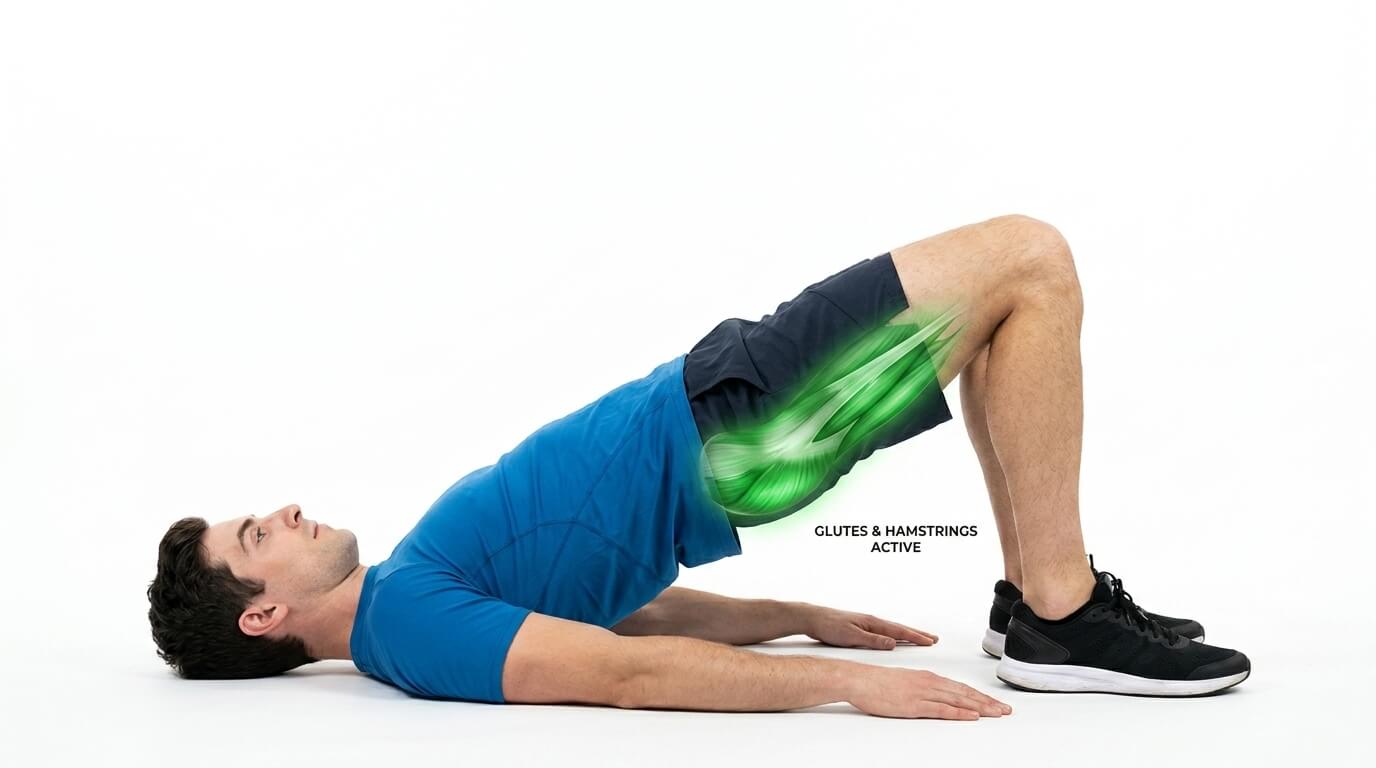
Supine bridges produce moderate gluteus maximus activation (around 30–35% MVIC) with endurance‑oriented recruitment of glute max, glute med, lumbar multifidus, and hamstrings. Single‑leg variants on a stable surface show the highest glute activation, indicating a clear progression path as you adapt [2]. Practically, that means better glute firing in everyday hip extension (standing, walking, stair climbing) and reduced reliance on lumbar extensors for basic tasks.
Posture & Spinal Support
Glute bridges strengthen the posterior chain and core, which trainers and clinicians highlight as one of the fastest ways to improve posture and support the lower back. Stronger hip extensors and gluteal endurance help maintain neutral pelvic position, decreasing anterior pelvic tilt and lumbar hyperextension that show up as “desk posture” [3].
Lower Back Pain
A stabilisation‑plus‑glute‑strengthening approach that includes bridge‑type exercises has been shown to reduce low‑back pain and increase lumbar muscle strength and balance versus stabilisation work alone. Clinical reviews and physio guidance describe glute bridge variants as among the most effective single exercises for long‑term low‑back pain relief and disability reduction when done for several weeks. In a 30‑day window, you’d typically expect improved tolerance to sitting/standing, less “tight low back,” and better control in hip hinging—assuming no red‑flag pathology [4].
Hip Mobility & Control
Bridges require active hip extension from a flexed position and encourage full range while stabilising the pelvis. Repeated practice improves not just “mobility” in a passive sense but active control through hip extension, which transfers into cleaner squats, hinges, and gait mechanics [5]. Example: a sedentary 40‑year‑old doing 3 sets of 15–20 bodyweight bridges daily for 4–5 weeks often reports reduced morning stiffness, easier stair climbing, and less need to stretch hamstrings to feel “loose,” mainly because the glutes start doing their job.
💪 Track your progress: Use our BMI Calculator to monitor body composition changes, or the Calorie Deficit Calculator to align your nutrition with your training goals.
Correct Glute Bridge Form (Step‑by‑Step)
From the ground up [6]:
- Set‑up: Lie supine, knees bent, feet flat, roughly hip‑width apart. Heels about 6–12 inches from your hips, toes pointing straight ahead. Arms by your sides, palms up or down for light support.
- Alignment & bracing: Brace the core: ribs down, slight tension in the abs to keep the lower back neutral (no exaggerated arch). Think “heavy ribs, long spine,” so the movement comes from hips, not lumbar spine.
- Rising phase: Drive through your heels, not your toes, to lift the hips. Elevate until your body forms a straight line from shoulders to knees; avoid over‑thrusting and compressing the lumbar spine.
- Top position: Hold 1–3 seconds, breathing normally while keeping glutes and abs engaged. Knees track over mid‑foot; don’t let them cave inward or flare excessively.
- Lowering phase: Lower the hips slowly under control, maintaining some tension rather than completely relaxing between reps. Light tap of the sacrum on the floor, then immediately into the next rep.
Key mistakes to avoid: pushing through toes (loads quads/lumbar), arching the back at the top, letting knees drift inward, and rushing through reps without full glute contraction [7].
Progressions Over a Month
You can structure a 30‑day progression from basic activation to advanced unilateral and loaded work [8] [9].
| Week | Focus | Main Variations |
|---|---|---|
| 1 | Pattern & control | Basic bridge, bridge holds |
| 2 | Endurance | Higher reps, longer holds, pulses |
| 3 | Unilateral stability | Single‑leg bridge, marching bridge |
| 4 | Intensity | Modified single‑leg (135° knee), load or elevation |
Daily Sets, Reps, and Programming
Evidence and coaching guidelines converge around moderate volumes that emphasise endurance and control rather than max strength [10].
- Beginner / pain‑management focus: 3 sets of 10–15 reps, 1–2 second hold at top. Or 2–3 sets of 20–30‑second holds for isometric variants. Rest 30–60 seconds between sets.
- Intermediate / strengthening: 3–4 sets of 15–25 bodyweight reps. Progress to 8–12 reps per set with external load (barbell/dumbbell) as strength improves.
- Daily practice: For low‑back/posture goals, low‑to‑moderate‑volume bridges can be done daily. If using heavy external loads, treat them like any other strength lift (2–3 non‑consecutive days/week).
For a 30‑day challenge: daily 3 sets of 15–20 slow, controlled bodyweight bridges, progressing to unilateral/elevated variations in weeks 3–4, while reserving heavy loading for 2–3 days/week only.
Self‑Assessment Tests (Day 0 / 15 / 30)
Track your progress with these simple tests [11]:
- Glute bridge activation check: Hold a basic bridge 15–20 seconds. Where do you feel it most—glutes, hamstrings, or low back? Goal by Day 30: “I feel this mostly in my glutes.”
- Single‑leg bridge strength test: Hold a single‑leg bridge 10 seconds per side. Note wobble, asymmetry, or back discomfort. Goal: 10 seconds per leg at full extension, no back pain.
- Hip extension range: Film a side‑view bridge. Are shoulders–hips–knees in one line, or is there over‑arching? Goal: neutral straight‑line position with abs lightly braced.
- Sit‑to‑stand functional test: Using a stable chair, perform a 30‑second sit‑to‑stand test and count reps. Goal: +2 or more reps or faster time by Day 30.
How Bridges Compare to Other Lower‑Body Moves
| Goal | Glute Bridge | Hip Thrust | Squat / Lunge |
|---|---|---|---|
| Glute activation | High, especially barbell bridge | Slightly lower GM, more quad involvement | Good, but technique‑dependent |
| Low‑back friendliness | Very joint‑friendly, floor‑based | More technical, not ideal early in rehab | Can aggravate if mechanics off |
| Hip mobility & control | Strong focus on hip extension with stable spine | Excellent for loaded extension | Multiple planes, requires more skill |
| Posture improvement | Directly reinforces posterior chain & core | Better for strength/hypertrophy | Great but harder to dose daily |
| Suitability for daily practice | High (bodyweight/endurance) | Moderate (not ideal daily heavy) | Lower for daily heavy work |
In short: for a 30‑day “spine‑friendly posterior chain reboot,” daily glute bridges and their progressions are usually a better choice than squats or heavy hip thrusts, especially for your audience over 30–40 with desk‑bound habits and intermittent low‑back complaints [1].
The Bottom Line
Three simple “wins” you should track over 30 days:
- Muscle feel shift: Start: “I feel bridges in my hamstrings or low back.” End: “I feel bridges mainly in my glutes.”
- Movement quality: Clean bridge line, controlled single‑leg holds, smoother chair stands with less wobble.
- Daily life markers: Less morning low‑back stiffness, easier stair climbing, better tolerance for sitting/standing.
The science is clear: 30 days of consistent glute bridges won’t transform your entire body, but it will build a foundation of posterior‑chain strength, spinal support, and body awareness that carries into everything else you do.
Related tools: BMI Calculator | Calorie Deficit Calculator | More articles: Wellness
Health & Fitness Disclaimer: The information presented in this article is data-driven and intended for educational purposes only. It is not a substitute for professional medical advice, diagnosis, or treatment. Always consult with a qualified physician or healthcare provider before beginning any new exercise regimen, diet, or lifestyle shift.