
What Do Calf Raises Actually Do?
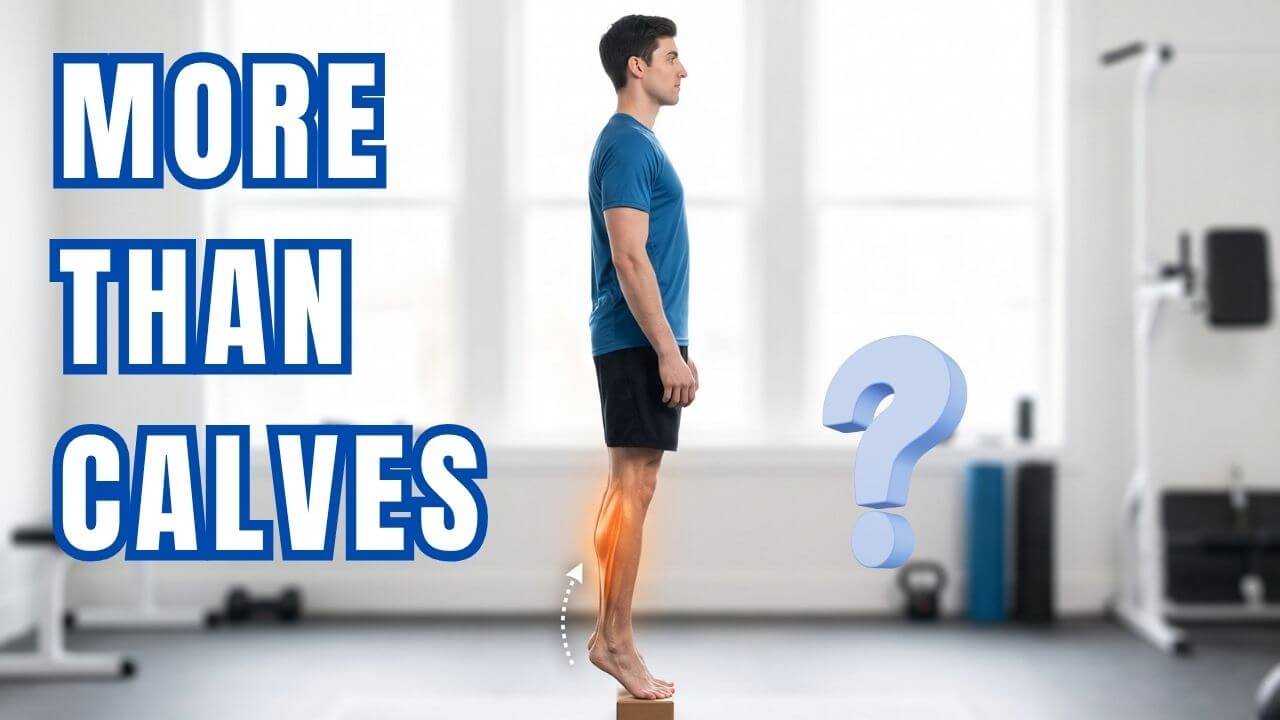
Adapted from a video on my PeakPhysic YouTube channel. Subscribe for more science‑backed fitness insights.
Watch the video above, then read on for the full breakdown of the muscles and science behind calf raises.
What are you actually training when you do a calf raise? Primarily, your calf muscles — but there is more going on than just building your calves. And how does a simple exercise like this benefit you? Calf raises can help develop lower‑leg strength and ankle function, and one of the muscles you’re training is particularly interesting.
⚠️ Disclaimer: This article is for educational and analytical purposes only. It does not constitute medical or fitness advice. Consult a qualified professional before starting any new exercise programme.
How to Perform a Calf Raise Properly
- Stand tall with your feet about hip‑width apart.
- Keep your feet pointing naturally forward and your weight balanced across the whole foot.
- Slowly raise your heels, so you’re standing on the balls of your feet.
- Pause briefly at the top.
- Lower your heels under control until your feet are flat again.
Think of the motion like this: Lift through the balls of your feet. Pause. Lower with control. Keep your body tall and let the movement come from your ankles.
Your Calf Muscles: The Anatomy
Your calves have two main muscles:
- Gastrocnemius: The large, outer muscle that gives your calf its rounded shape. It crosses both your knee and your ankle, and is particularly involved in more forceful movements such as running and jumping.
- Soleus: A wide, flat muscle that sits underneath the gastrocnemius. It only crosses your ankle. The soleus is particularly important during sustained, lower‑intensity activities such as standing and walking.
- Achilles Tendon: Both muscles join together at the bottom and attach to your heel bone through this large tendon.
- Triceps Surae: The combined group name doctors and scientists use to describe these calf muscles.
Together, they help produce plantar flexion — the movement that points your foot downward and raises your heel. They help you walk, run, jump, and maintain your posture. So every time you raise your heel, you’re training these two important muscles.
The Surprising Blood‑Sugar Connection
Both muscles are crucial, but it’s the soleus that’s attracting scientific attention for a fascinating reason. Research has shown that the soleus can influence how the body handles glucose.
A 2025 pilot study looked at something called the soleus push‑up — a seated movement involving repeated, prolonged contractions of the soleus. Ten people with prediabetes performed the movement during an oral glucose tolerance test. The researchers found approximately a 32% reduction in post‑meal glucose excursion compared with the sedentary baseline.
This is scientifically interesting, even though that was a very small pilot study, and larger studies are needed to confirm the finding. So the sensible conclusion is: your calf muscles are metabolically interesting. The soleus in particular is attracting scientific attention. This does not imply that calf raises are a treatment for blood sugar.
📊 Track your fitness progress: Use our Strength Standards to benchmark your lower‑body strength, or the BMI Calculator to monitor body composition changes as you build muscle.
The Bottom Line
Calf raises may look simple, but they help build lower‑leg strength and support lower‑body movements. Try it today. Do 10 controlled calf raises and pay attention to the movement from your ankles through your calves. Commit to yourself and get 1% better each day. Train smarter, not harder.
📺 This article was adapted from a PeakPhysic video. Subscribe to PeakPhysic for more science‑backed fitness insights.
Related tools: Strength Standards | BMI Calculator | 1‑Rep Max Calculator | More articles: Analytical Living
Author: Dr. Shirley Cheung. This content is for informational purposes only and does not constitute professional fitness or medical advice.