
Squats – I Don’t Feel My Glutes
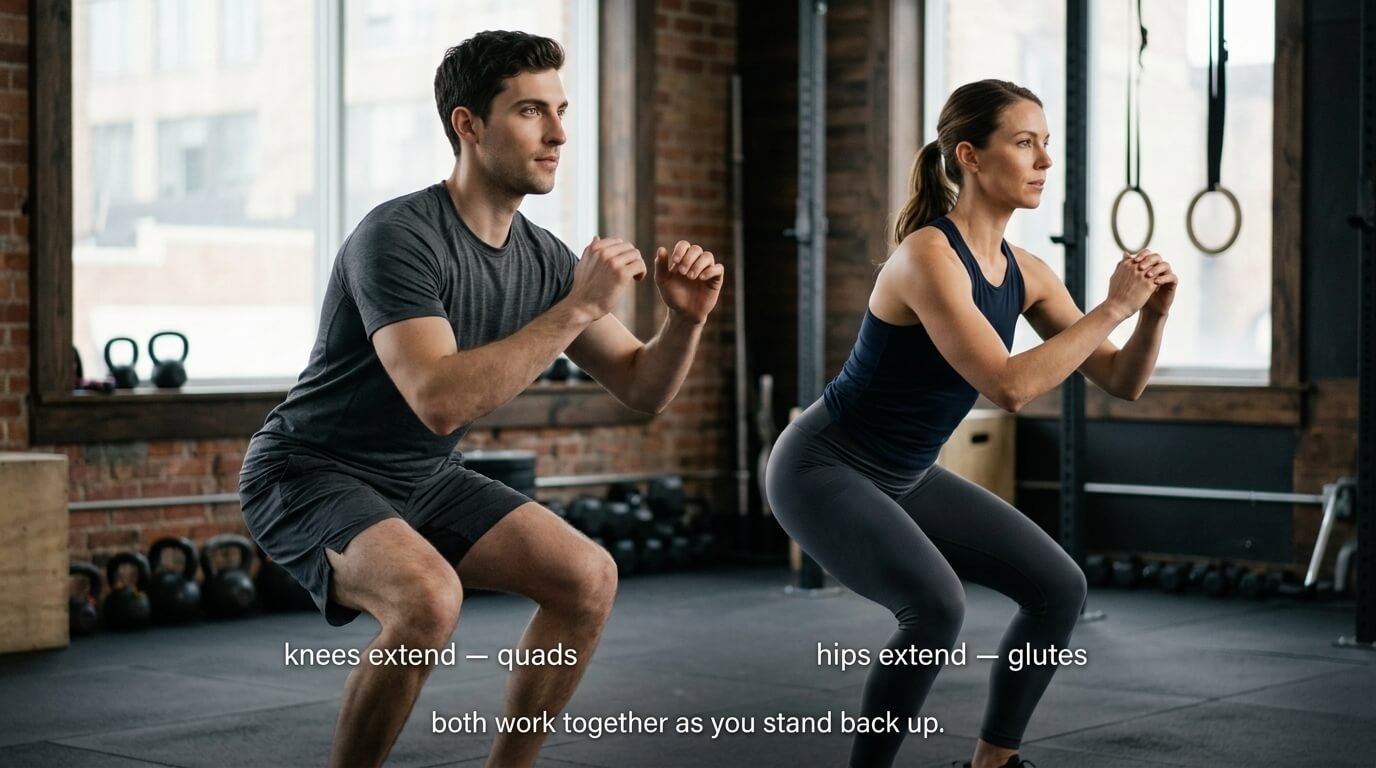
You’ve been doing squats. Maybe for years. And you’re still wondering — how is this supposed to work my glutes when I feel everything in my thighs? Is that you? How should a squat feel, and where should you feel it for the effort to be worthwhile?
When you perform a standard bodyweight squat, two major muscle groups do a lot of the work: your quadriceps, at the front of your thighs, and your gluteus maximus, the large muscle in your buttocks. Your quads help straighten your knees. Your glutes help extend your hips. Both work together as you stand back up.
So, yes, you should expect to feel muscular effort in your thighs and hips. But you don’t necessarily need to feel an intense burn in your glutes. A muscle can be doing its job without producing the sensation you’re expecting.
⚠️ Disclaimer: This article is for educational and analytical purposes only. It does not constitute medical or fitness advice. Consult a qualified professional before starting any new exercise programme.
Let’s Check How You’re Squatting
- Start with your feet in a comfortable stance, around shoulder-width apart, with your toes turned out slightly if that feels natural.
- Keep your whole foot in contact with the floor.
- Lower yourself by bending your hips and knees together.
- Keep your torso controlled, and descend as far as you comfortably can without losing control of your position.
- Stand back up by pushing through the floor and extending your hips and knees.
Watch the video above to see the squat in action.
That’s the basic movement. Your knees straighten, your hips extend, and your glutes help bring you back to standing.
Why You Might Feel Your Quads More
First, remember that squats are not a glute-isolation exercise. Your quadriceps are doing substantial work, so feeling your thighs more prominently is perfectly normal.
Second, look at your depth. If you’re only bending your knees a little, you’re using a smaller range of motion. Descending deeper — when you can maintain control and your body comfortably allows it — increases hip flexion and can provide a greater training stimulus for your glutes. You don’t need to force yourself into the deepest possible squat, though.
Third, consider the challenge. If bodyweight squats have become very easy, your muscles may not experience much fatigue during a set. Progressing your repetitions or adding external load can increase the training demand.
And here’s something important: don’t try to solve everything by squeezing your glutes as hard as possible at the top. Your glutes need to extend your hips during the movement. An exaggerated squeeze or arching your lower back isn’t necessary.
What About That Burning Sensation?
You may feel fatigue in your quads, your glutes, or both. The exact sensation varies between people. But if you’re feeling sharp pain or significant discomfort in your knees, hips, or lower back rather than ordinary muscular effort, stop and reassess your technique.
📊 Track your progress: Use our 1‑Rep Max Calculator to estimate your squat strength, and Strength Standards to benchmark your lifts by age and gender.
How to Progress
Once you’ve mastered the basic squat, there are a few ways to progress:
- Goblet squat: Adds a dumbbell or kettlebell held in front of your chest, allowing you to increase resistance while keeping the same basic squat pattern.
- Pause squat: Adds a deliberate pause near the bottom. This removes the bounce and challenges you to control the position before standing up again.
- Slow-tempo squat: Uses a deliberately slower descent, making you control the lowering phase rather than dropping quickly into the bottom.
These variations change the challenge in different ways. None guarantees that you’ll feel your glutes more, but each can help you develop control or increase the demands of your training.
The Bottom Line
So, the next time you squat and feel mostly your thighs, don’t automatically assume your glutes aren’t working. Look at how you move, how much controlled range you’re using, and whether the exercise is challenging enough for your current strength.
A squat trains your lower body through the combined action of your hips and knees. Your glutes can contribute meaningfully even when they aren’t the muscle you feel most. Train smarter, not harder.
📺 This article was adapted from a PeakPhysic video. Subscribe to PeakPhysic for more science‑backed fitness insights.
Related tools: 1‑Rep Max Calculator | Strength Standards | BMI Calculator | More articles: Analytical Living
Author: Dr. Shirley Cheung. This content is for informational purposes only and does not constitute professional fitness or medical advice.